
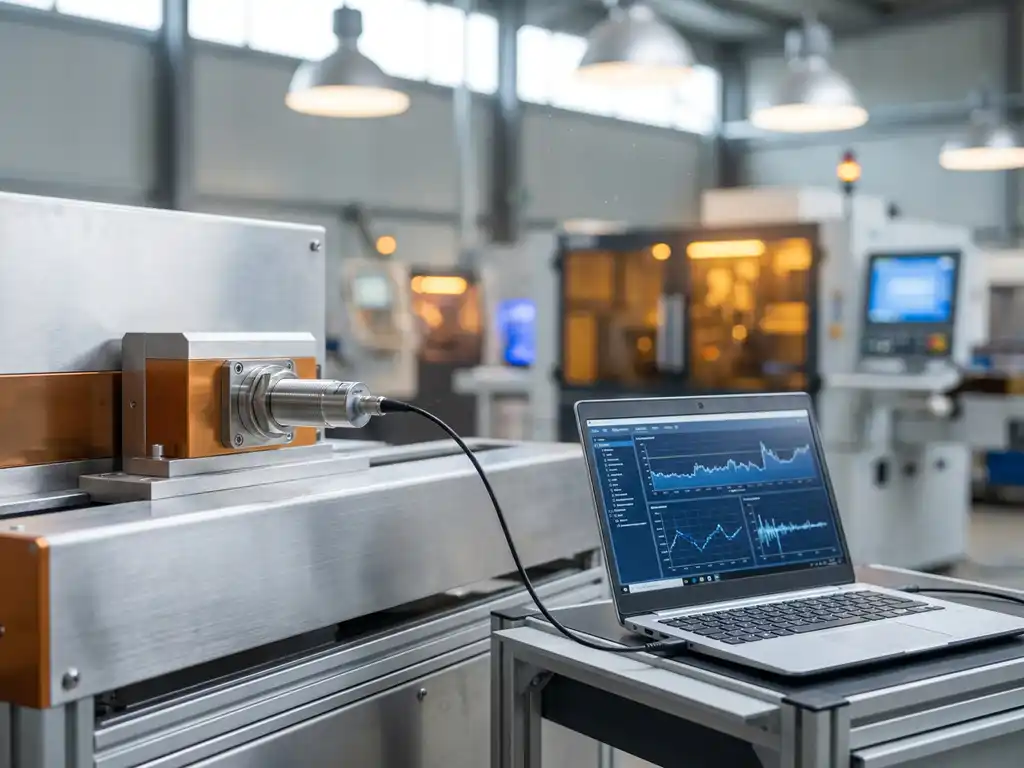
Sensor data and business data work together by connecting operational technology (OT) systems, such as sensors, SCADA, and MES platforms, to IT systems like ERP, CRM, and data warehouses through a unified data platform. When these two data worlds are properly integrated, organizations gain a complete, real-time picture of what is happening on the factory floor and what it means for the business.
For manufacturers, energy companies, and agritech organizations, this connection is not a nice-to-have. It is the foundation for predictive maintenance, supply chain optimization, and compliance with frameworks like the EU AI Act and NIS2. The sections below unpack the key questions around OT-IT integration, from the basics to the business decisions it unlocks.
Why don’t sensor data and business data naturally speak the same language?
Sensor data and business data are built on fundamentally different foundations. Sensor data originates from operational technology systems designed for real-time control and reliability, while business data lives in IT systems designed for transactions, reporting, and analysis. These two worlds evolved independently, with different protocols, formats, time resolutions, and priorities, so bridging them requires deliberate engineering effort.
On the OT side, sensors communicate using industrial protocols such as Modbus, OPC-UA, and MQTT. They produce high-frequency, time-series readings measured in milliseconds or seconds. On the IT side, systems like ERP and CRM operate on structured relational data, updated in batches or based on user actions. A machine sensor might emit thousands of readings per hour, while a business system records a single production order entry.
The cultural and organizational gap compounds the technical one. OT teams prioritize uptime and safety above all else. IT teams prioritize data integrity and auditability. When these teams have historically operated in silos, the integration work falls into a gap that neither fully owns. This is why so many organizations have rich sensor data sitting in historian databases that never reaches their analytics platform, and business reports that ignore what is actually happening on the production floor.
What is OT-IT integration and how does it work?
OT-IT integration is the process of connecting operational technology systems, including sensors, PLCs, SCADA, and MES platforms, to information technology systems so that machine-level data can flow into analytics, reporting, and business applications. It works by extracting raw operational data, normalizing it into a consistent format, and loading it into a central data platform where it can be combined with business context.
The integration typically involves several layers. At the edge, data collection agents or industrial gateways read from OT systems using native protocols and forward readings to a message broker or streaming platform. From there, a data engineering pipeline transforms the raw, high-frequency signal data into structured, queryable records. Timestamps are aligned, units are standardized, and identifiers are mapped to business entities like assets, production lines, or sites.
A well-built OT-IT integration does not just move data. It adds observability so that broken pipelines are caught before a faulty sensor reading corrupts a production report. It enforces data quality rules at ingestion, flags anomalies, and maintains lineage so that every downstream consumer knows exactly where a reading came from and when it was collected. This is the kind of data engineering work that turns raw machine output into a trustworthy business asset.
What types of sensor data can be connected to business systems?
A wide range of sensor and operational data sources can be connected to business systems, including temperature, pressure, flow rate, vibration, energy consumption, machine state, and quality inspection readings. In manufacturing, energy, and agritech environments, this data typically originates from SCADA systems, IoT sensors, historian databases, MES platforms, and PLCs.
Here are the most common sensor data types and their business relevance:
- Machine telemetry — vibration, temperature, and current readings from production equipment, used for predictive maintenance and asset health monitoring
- Process parameters — pressure, flow, speed, and chemical concentration readings that determine product quality and process efficiency
- Energy consumption data — electricity, gas, and water usage at machine or line level, used for sustainability reporting and cost allocation
- Environmental sensors — humidity, CO2, and ambient temperature readings relevant to both product quality and regulatory compliance
- Location and movement data — GPS and RFID signals tracking assets, vehicles, or goods through a facility or supply chain
- Yield and quality signals — inline inspection results, reject counts, and batch outcomes from MES systems linked to production orders
Each of these data types carries operational meaning on its own. The business value emerges when they are combined with context from ERP, supply chain, or maintenance systems.
What are the biggest challenges in combining sensor and business data?
The biggest challenges in combining sensor and business data are protocol heterogeneity, data volume and velocity, time synchronization, and organizational ownership gaps. Each of these challenges can independently block integration, and in practice they often appear together.
Technical challenges
Industrial environments use dozens of communication protocols, and few of them were designed with IT integration in mind. Translating Modbus registers or OPC-UA node hierarchies into relational or columnar data structures requires domain knowledge that most data engineering teams simply do not have. Sensor data also arrives at very high frequency, which creates storage, processing, and cost challenges when ingested into a general-purpose data platform without proper aggregation strategies.
Time synchronization is a subtler but critical problem. A sensor reading timestamped at the edge may arrive at the platform seconds or minutes later, and if clocks are not synchronized across systems, correlating a machine event with a business transaction becomes unreliable. This is especially problematic in quality investigations or regulatory audits where the sequence of events matters.
Organizational challenges
Even when the technical path is clear, organizational friction slows integration down. OT teams are often reluctant to grant IT systems access to production networks, and rightly so. Unauthorized access to a SCADA system is a safety and security risk. Establishing the right network segmentation, access controls, and change management processes requires buy-in from plant operations, IT security, and leadership simultaneously.
Data ownership is equally contested. Who is responsible for the quality of a sensor reading once it enters the data platform? Who maintains the mapping between a machine identifier in the historian and an asset record in the ERP? Without clear ownership structures, these mappings drift and break, and the business loses trust in the data. Partnering with a team that offers managed services for data platforms can help organizations establish and sustain these ownership structures over time.
How does a unified data platform bring sensor and business data together?
A unified data platform brings sensor and business data together by providing a single, governed environment where both data types are ingested, normalized, and made queryable alongside each other. Rather than maintaining separate pipelines for OT and IT data, a well-designed platform creates a shared foundation with consistent data models, quality rules, and access controls that serve every consumer from the analytics team to the ML engineer.
In practice, this means building ingestion pipelines that handle both high-frequency sensor streams and batch business data extracts, landing them in a common storage layer such as a lakehouse architecture on AWS, Azure, or GCP. From there, transformation layers map raw operational data to business entities. A sensor reading becomes associated with a specific asset, production order, and shift. A machine downtime event becomes linkable to a supply chain impact.
Observability is built into the platform from the start. Pipeline health checks, data freshness alerts, and quality monitors ensure that a broken sensor connection or a schema change in the MES is caught automatically, not discovered when a report produces unexpected results. We build these platforms with lineage tracking so that every analyst and every model knows the provenance of the data it is working with. For organizations looking to start this journey, speaking with a data engineering team that has hands-on OT-IT experience is the most direct path forward.
What business decisions become possible when sensor and business data are unified?
When sensor and business data are unified, organizations can make decisions that were previously impossible: predicting equipment failures before they cause production stops, calculating the true cost of quality at the batch or product level, optimizing energy consumption in real time against production schedules, and meeting compliance requirements with auditable, traceable data. These are not incremental improvements. They are decisions that change how a business operates.
Consider predictive maintenance. Without sensor data in the same platform as maintenance records and production schedules, a data team can build a model that flags a bearing anomaly, but it cannot automatically assess whether the affected machine is running a critical order, whether a spare part is in stock, or what the cost of an unplanned stop would be. With unified data, that context is available, and the maintenance recommendation becomes actionable rather than informational.
The same logic applies to energy management, yield optimization, and regulatory reporting. The EU AI Act and NIS2 both impose traceability and data quality requirements that are only achievable when operational and business data share a governed, documented platform. Organizations that have made this investment find that the return extends well beyond the original use case. A platform built for predictive maintenance becomes the foundation for supply chain optimization, sustainability reporting, and eventually autonomous process control.
The shift from siloed operational data to a unified platform is not primarily a technology project. It is a data engineering discipline that requires the right architecture, the right pipelines, and the right governance to sustain over time.